
தமிழ்நாடு உயர் திறன் மேம்பாட்டு மையம் – தளவாடங்கள்

TN APEX SKILL DEVELOPMENT CENTRE FOR LOGISTICS

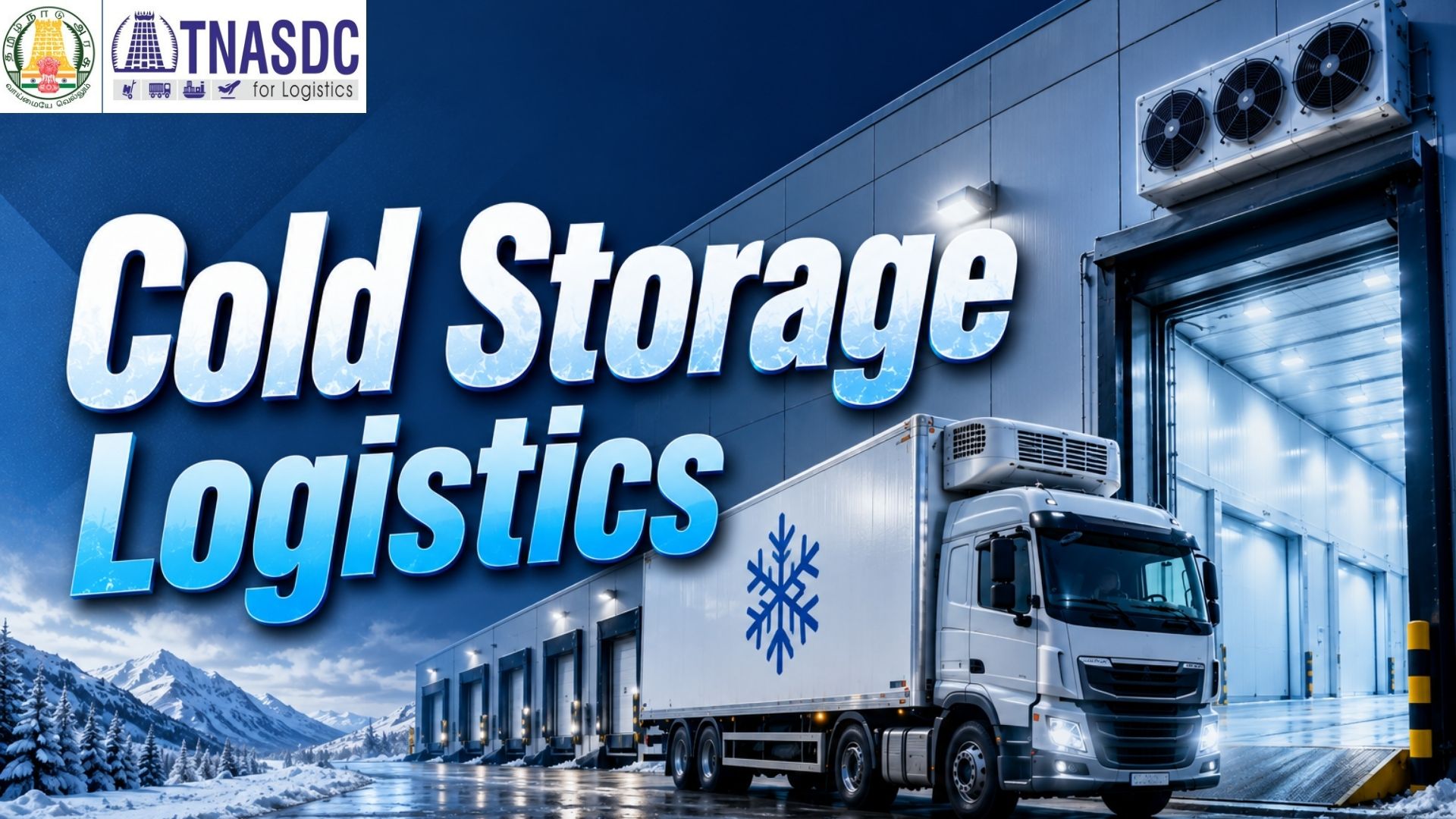
Cold Storage Logistics

Categories: Logistics & SCM
Wishlist Share

About Course

  • Understand the fundamental principles of cold chain management
  • Identify the key components of cold chain infrastructure
  • Apply correct temperature and humidity standards for storing different categories of perishable products
  • Understand the regulatory and compliance framework governing cold chain operations in India
  • Understand India’s cold chain industry structure, government schemes supporting cold chain development

What Will You Learn?

  • Upon successful completion of this course, participants will be able to:
  • Understand Cold Chain Fundamentals and the role of temperature-controlled logistics in preserving product quality and safety.
  • Manage Cold Storage Operations including receiving, storage, inventory control, order processing, and dispatch of perishable goods.
  • Monitor Temperature and Compliance Requirements using industry standards, regulatory guidelines, and quality assurance practices.
  • Implement Cold Chain Transportation Strategies to ensure uninterrupted temperature control during transit and distribution.
  • Identify and Mitigate Risks in Cold Logistics by applying best practices in handling, equipment maintenance, safety management, and contingency planning.

Course Content

UNIT 1 — Fundamentals of Cold Chain and Cold Storage Management
After completing this unit, learners will understand the concept of cold chain and cold storage management and their critical importance across food, fisheries, agriculture, pharmaceutical, and logistics sectors. They will identify the key components of a cold chain system, distinguish between types of cold storage facilities, and appreciate the role of cold chain logistics in reducing food loss and preserving product quality. Learners will also become aware of the cold chain ecosystem in Tamil Nadu and India and explore career opportunities available in this growing industry.

  • 1.1 Introduction to Cold Chain and Cold Storage
  • 1.2 Importance in Food, Fisheries, Agriculture, Pharma and Logistics Sectors
  • 1.3 Components of a Cold Chain System
  • 1.4 Types of Cold Storage Facilities
  • 1.5 Benefits of Cold Chain Logistics
  • 1.6 Role in Reducing Food Loss and Product Wastage
  • 1.7 Shelf Life Enhancement and Quality Preservation
  • 1.8 Challenges and Opportunities in the Cold Chain Industry
  • 1.9 Cold Chain Ecosystem in Tamil Nadu and India
  • 1.10 Career Opportunities in Cold Chain Logistics
  • Practice Quiz

UNIT 2 — Cold Storage Infrastructure and Facility Design
After completing this unit, learners will understand how to plan and design cold storage facilities including site selection, layout, temperature zones, and storage classifications. They will become familiar with insulation materials and technologies, construction principles for floors, walls, and roofs, loading and unloading dock design, controlled and modified atmosphere storage, energy-efficient design approaches, automation technologies, and safety standards applicable to cold storage facilities.

UNIT 3 — Refrigeration Systems and Equipment Management
After completing this unit, learners will understand the fundamental principles of refrigeration and cooling, the refrigeration cycle, types of refrigerants and their applications, vapour compression and absorption systems, and the key components of refrigeration systems including compressors, condensers, evaporators, and expansion valves. They will also develop practical knowledge of refrigeration unit selection, preventive maintenance, troubleshooting, energy efficiency practices, natural refrigerants, green cooling technologies, and refrigeration safety standards.

UNIT 4 — Cold Chain Logistics and Transportation Operations
After completing this unit, learners will understand the structure and functioning of cold chain transportation networks, the types of refrigerated vehicles and containers used in cold logistics, temperature monitoring during transit, route planning and fleet management principles, loading and unloading best practices, transit damage prevention, multimodal transportation options, last-mile delivery challenges, and the documentation and regulatory requirements governing cold chain transportation operations in India.

UNIT 5 — Perishable Product Storage, Monitoring and Digital Technologies
After completing this unit, learners will understand the specific storage requirements for different perishable product categories including fruits and vegetables, seafood, meat and poultry, dairy, frozen foods, and pharmaceuticals. They will develop knowledge of inventory management methods for perishables, shelf-life extension techniques, packaging materials for cold storage, and the digital technologies transforming the cold chain including IoT sensors, data logging, cold chain management software, SCADA and PLC systems, AI-based predictive maintenance, blockchain for traceability, and quality assurance and regulatory compliance frameworks.

Final Assessment
Answer all the Multiple Choice Questions

Earn a certificate

Add this certificate to your resume to demonstrate your skills & increase your chances of getting noticed.
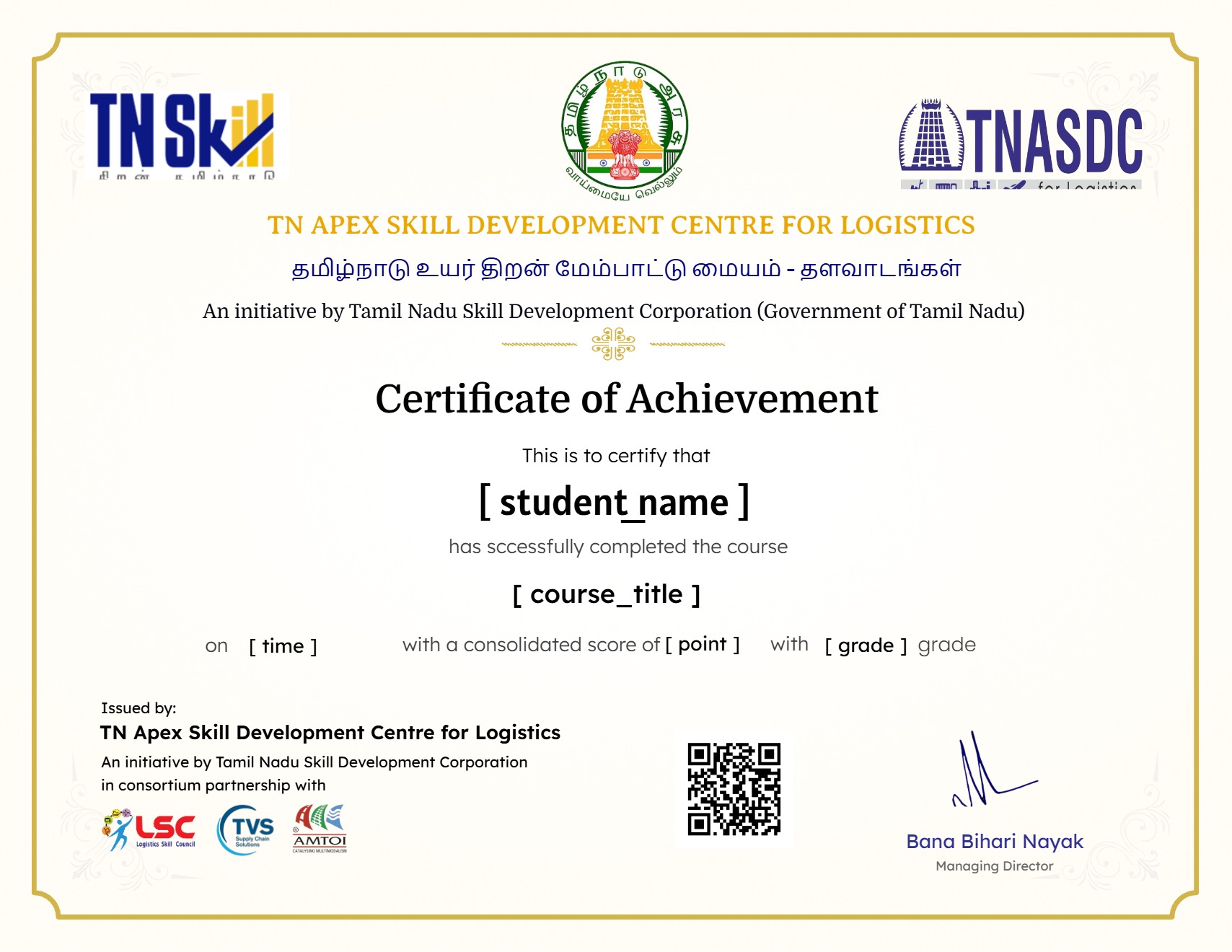
selected template

Student Ratings & Reviews

No Review Yet
No Review Yet

Want to receive push notifications for all major on-site activities?