
தமிழ்நாடு உயர் திறன் மேம்பாட்டு மையம் – தளவாடங்கள்

TN APEX SKILL DEVELOPMENT CENTRE FOR LOGISTICS

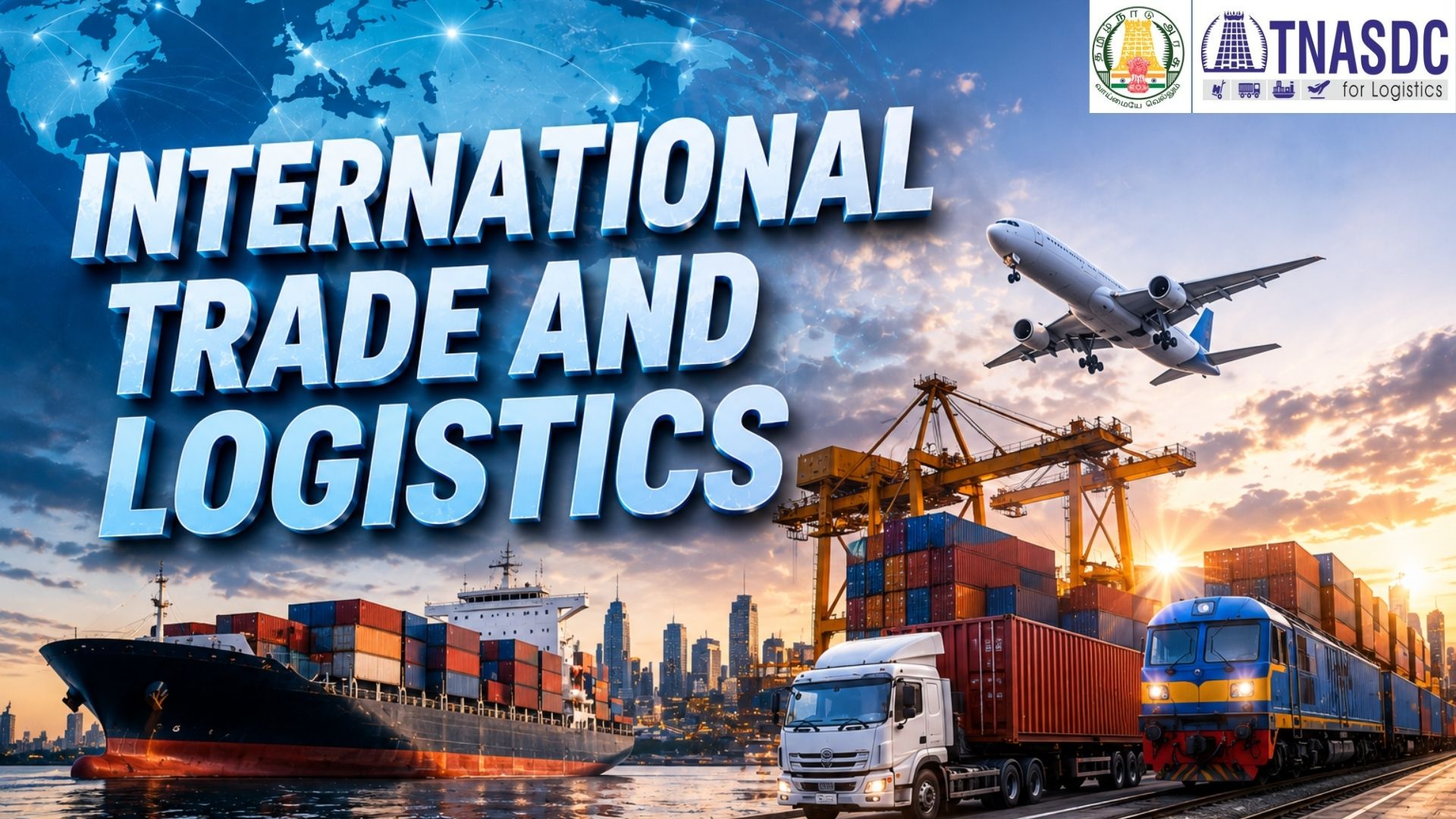
International Trade and Logistics

Categories: Logistics & SCM
Wishlist Share

About Course

Course Objectives

  • Understand the principles of commercial geography.
  • Identify the major trade routes, trade corridors, and gateway ports of the world.
  • Understand the structure and operations of the global shipping and logistics industry.
  • Apply knowledge of India’s export promotion schemes.
  • Understand the operations of the air cargo industry.

What Will You Learn?

  • Upon successful completion of this course, participants will be able to:
  • Understand Global Trade Processes including import-export procedures, international trade regulations, and global supply chain operations.
  • Prepare and Manage Trade Documentation such as commercial invoices, packing lists, bills of lading, certificates of origin, and customs documents.
  • Apply Incoterms and Trade Compliance Requirements to facilitate smooth international transactions and minimize trade risks.
  • Coordinate International Transportation and Freight Operations across sea, air, road, and multimodal logistics networks.
  • Analyze Global Logistics Challenges and Solutions related to customs clearance, risk management, cost optimization, and international market access.

Course Content

UNIT 1 — Commercial Geography and Global Trade Environment
After completing this unit, learners will understand the relationship between geography and international trade, identify major trade routes, corridors, and gateways of the world, analyse global production and consumption patterns, recognise the role of natural resources and industrial locations in shaping trade flows, and appreciate India's strategic geographic position in global trade. Learners will also understand how geography influences logistics and supply chain planning decisions at both national and international levels.

  • 1.1 Introduction to Commercial Geography
  • 1.2 Physical and Economic Geography
  • 1.3 Major Trade Routes of the World
  • 1.4 International Trade Corridors and Gateways
  • 1.5 Global Production and Consumption Patterns
  • 1.6 Natural Resources and Industrial Locations
  • 1.7 Major Ports, Airports and Logistics Hubs
  • 1.8 Regional Trade Blocs and Economic Zones
  • 1.9 India’s Trade Geography and Strategic Location
  • 1.10 Role of Geography in Logistics and Supply Chain Planning
  • Practice Quiz

UNIT 2 — Shipping and Logistics Management
After completing this unit, learners will understand the fundamentals of shipping and logistics, the various modes of transportation used in international logistics, the operations of maritime transport, types of ships, port and terminal management, containerization, warehousing, logistics documentation, freight forwarding, and emerging trends in logistics digitalization. Learners will develop a comprehensive understanding of how the global shipping and logistics industry functions and the career opportunities it presents.

UNIT 3 — Supply Chain Management and Operations
After completing this unit, learners will understand the fundamental concepts and scope of supply chain management, apply supply chain planning and coordination principles, develop knowledge of procurement and vendor management, inventory management techniques, warehouse operations, demand forecasting, transportation and distribution management, supply chain performance measurement, risk management, and technology applications including ERP, IoT, and AI in supply chain operations.

UNIT 4 — Export-Import Management and International Marketing
After completing this unit, learners will understand the fundamentals of international trade and export-import management, the step-by-step procedures for exporting and importing goods, the documentation required for international trade, customs regulations and compliance requirements, INCOTERMS and trade contracts, export promotion schemes and incentives available in India, international payment methods and trade finance, the principles of international marketing, market research and global market entry strategies, and branding and product positioning in international markets.

UNIT 5 — Air Cargo Operations and Global Logistics Practices
After completing this unit, learners will understand the structure and operations of the air cargo industry, the processes involved in air freight operations, the documentation and regulations governing air cargo, cargo acceptance, handling, and security procedures, the special requirements for dangerous goods and special cargo, air cargo warehousing and terminal operations, freight rate calculation, airline and airport cargo management, integrated global logistics solutions, and career opportunities in air cargo and international logistics.

Final Assessment
Answer all the Multiple Choice Questions

Earn a certificate

Add this certificate to your resume to demonstrate your skills & increase your chances of getting noticed.
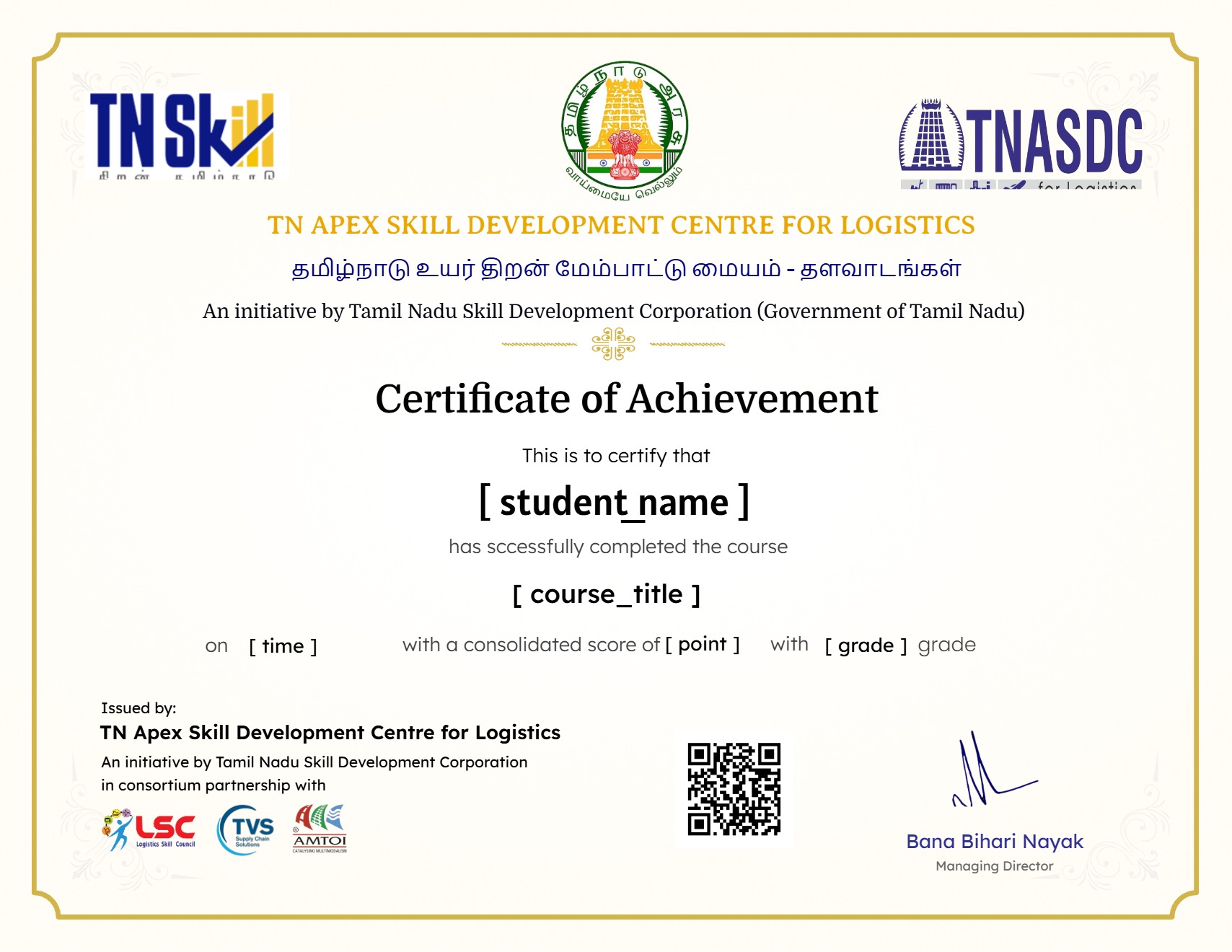
selected template

Student Ratings & Reviews

No Review Yet
No Review Yet

Want to receive push notifications for all major on-site activities?